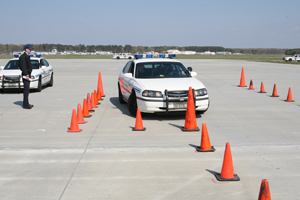
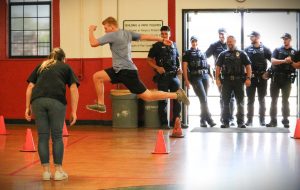
Receiving an offer of employment is not immediately accompanied by a badge, uniform, and set of keys to your new cruiser. Completion of an academy and field training program will be your final hurdles to becoming a full-fledged officer.
Each state and jurisdiction has different training requirements. In some areas, you can go through basic police training at the local community college or other state-sponsored institution first and then apply to the agency of your choice. Other jurisdictions may require you to complete their in-house training program after successful completion of their hiring process or sponsor you to attend an academy elsewhere. Still others may accept your external academy certificate but also require completion of an abbreviated version of their academy. Regardless, you can count on receiving extensive training prior to your first day on the job. The majority of your initial training will be classroom based, supplemented by practical exercises and scenarios. You will hold the rank of “cadet” or “police trainee” during this time, and if sponsored by a hiring agency, receive your first paycheck, and be eligible to receive benefits.
There is no standard national curriculum, but the state may guide agencies in developing training programs. Each state has a Commission on Peace Officers Standards and Training (POST) or similar entity which establishes minimum selection standards for police officers, sets minimum education and training standards, and serves as the certification or licensing authority for sworn personnel. These agencies may be helpful in getting an idea of your state’s approach to police training.